

Karen’s husband Alan was diagnosed with Parkinson's in 2019 and Lewy body dementia in 2022. Until recently, the former bilingual British Sign Language employment mentor juggled her freelance career and her role as Alan’s carer.
"Once you’ve had the diagnosis and they have got the medication, it feels like the system cuts you loose and the responsibility is on you. You are expected to find information, work out what support is available, and somehow navigate services at the time when you have the least capacity to do it.
What is needed is something like a care navigator. I really feel that is a big gap in provision. They would have local knowledge, and be able to signpost you, support you, and pull things together. There needs to be specialist care navigators that reflect the diversity of carers, including those from Black and Asian communities and people with sensory loss, such as Deaf British Language users, so it is inclusive for everyone.
I think that would make such a difference to have that at the point when you become a carer. You should not have to go searching for everything yourself when you are already overwhelmed.
Education is so key for carers. If you can understand why your loved one behaves the way that they do, then it just helps you to have more patience, knowledge, confidence, maybe reduce your anxiety, reduce your stress.
That is why I set up the Lewy body support group in Rotherham for people with the disease and their carers. We are supported by the memory service, and Voluntary Action Rotherham provides the room where we meet monthly with speakers from social prescribers, the police, to an occupational and a speech and language therapist.
It is a safe space where people can speak openly about caregiver strain, about the unique symptoms of Lewy body dementia including the hallucinations, cognitive fluctuations and sleep disturbance. These realities are often misunderstood.
I set up a carers-only WhatsApp group where we support each other in between meetings. Sometimes it is difficult for the carer to talk about sensitive things in front of the person they care for so having this space for themselves matters. People can be honest, share practical ideas, and talk to others who understand.
The aim is that the carer does not feel alone, that they know that there are people out there if they want them. It is that sense we are in it together. We often say we’re amazing out loud at meetings! It is that reinforcement matters - carers need to hear it.
Much of caring goes on unseen behind closed doors, and the carer loses a lot of their life because that is often all they have time to do. There should be more support to build a carer friendly community like ours.
Make us a priority and understand that carers save the government millions and millions of pounds. If you invest in carers, you actually have a stronger, better society.”
“Once you’ve had the diagnosis and they have got the medication, it feels like the system cuts you loose and the responsibility is on you.” - Karen
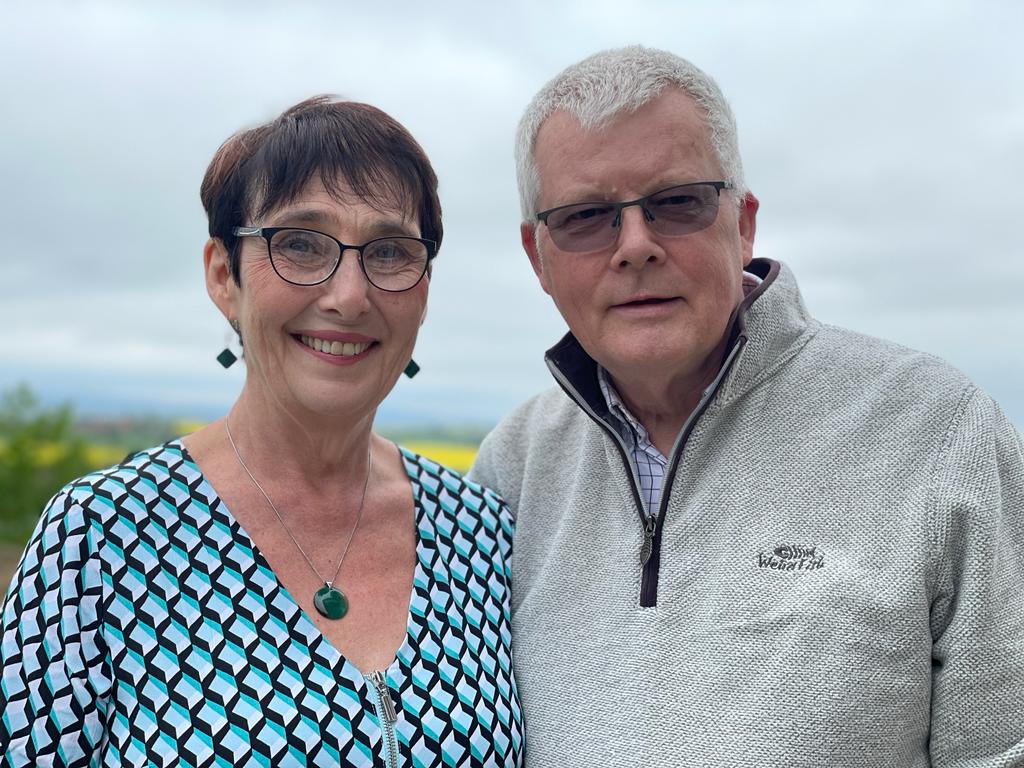
With thanks to Karen and the Lewy Body Society for sharing this story.