

Matt shares his experience of caring for his wife Gill, the challenges it can bring and the difference greater understanding and recognition would make.
"I’m Matt Fry, I’m 57 and live in Luton with my wife Gill. In June 2025, Gill was diagnosed with MND, although she had been experiencing symptoms since around 2018. From that point I became Gill’s full time carer.
What people don’t realise about being a carer is that I’m on call 24 hours a day. There’s no switching off. You do get into routines. Almost like a synchronised dance. Then there’s a little bit of progression of the disease, and suddenly that routine falls apart. So, you make a new one. That’s how it is all the time. No two days are the same.
It can be challenging and I don’t think people really appreciate what caring involves. You’re on duty all the time, with little rest. Cooking, cleaning, dressing Gill, getting her to appointments, making sure she is comfortable, planning journeys so they are step free, the list is endless. Comfort is becoming a big issue. It can take 15 minutes just to get her positioned properly in bed. People think, ‘that’s just normal household stuff’ but it’s not the same. Everything takes longer. It all mounts up. Carers really are undervalued.
There can also be a lot of isolation. Friends are busy with their own lives, which I understand. But it’s surprising who disappears. People you thought would be ‘there for you’ don’t always show up. That’s been one of the hardest parts for me. Realising that carers don’t always get the help and support they expect. It’s opened my eyes to how isolating this can be.
When it comes to carers and community, I don’t think carers are properly recognised. People see the person in the wheelchair but what they don’t really see or understand is all the work that goes on behind the scenes. You don’t just jump in the car and pop out anymore. There’s preparation, planning, lifting, adapting and thinking ahead all the time. That constant calculation is exhausting.
Another thing people don’t think about is being carer friendly. Most adaptations are designed purely for the disabled person, which is right, but carers matter too. On trains, for example, the wheelchair space is there. But there isn’t always a seat next to it for the carer. These are the things that make caring harder. They’re all well-intentioned but no one has really looked at the whole picture.
Finding someone who understand this matters. It’s comforting to talk to someone who just gets it, without you having to explain everything. The online carers community is so important, because the support is immediate. You can type something and usually someone comes back to you. That reassurance is huge.
It would just help if people had a bit more understanding. Not sympathy. Just understanding of what being a caring means, day in and day out. Recognition matters. I’m not asking for a medal or a gold star. That’s not what this is about. It’s just about understanding and know you are valued."
“It’s comforting to talk to someone who just gets it, without you having to explain everything” - Matt
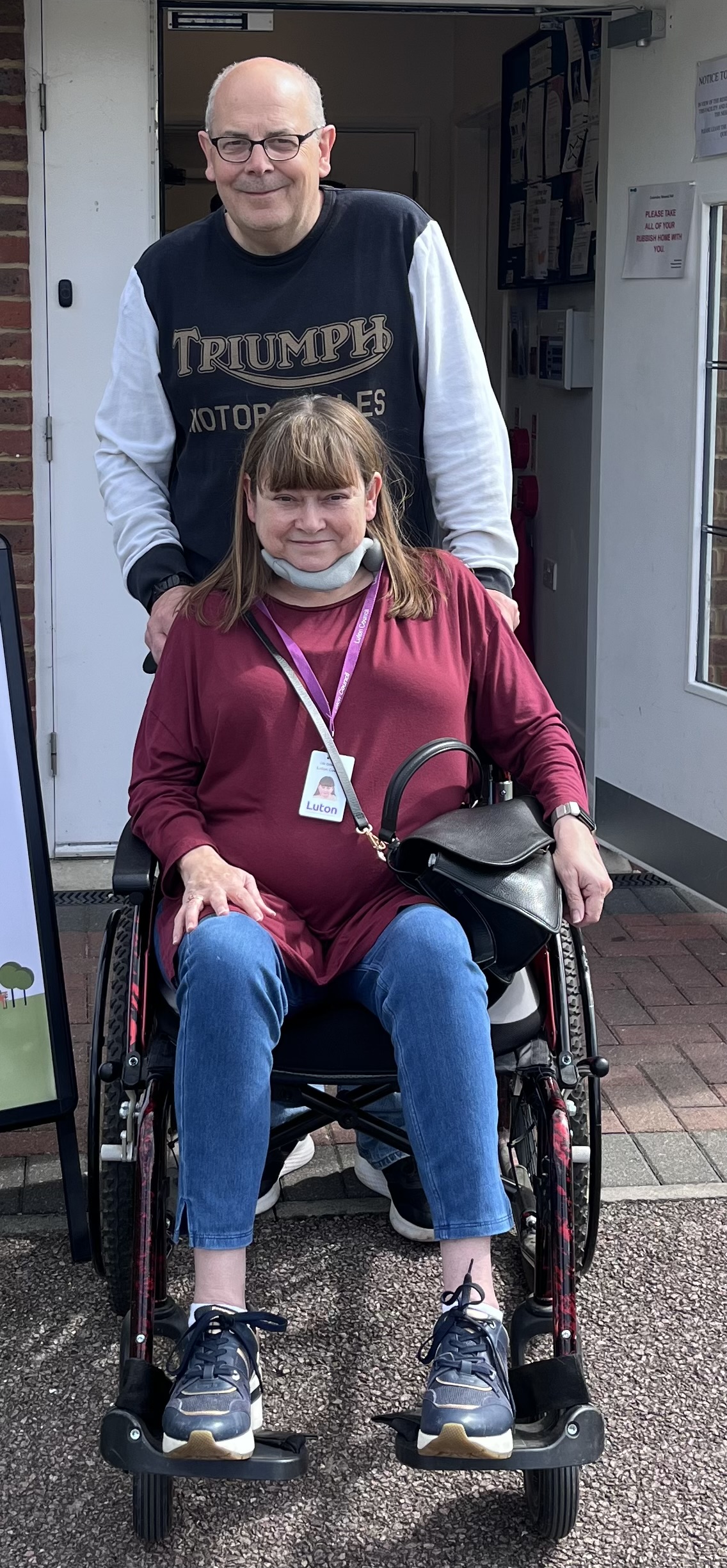
With thanks to Matt and the MND Association for sharing this story.